

 – click for General Verification Guidelines |
– click for Specific Verification Guidelines
– click for General Verification Guidelines |
– click for Specific Verification Guidelines
 – Uncommon / Scarce
 – care required in the identification process, as confusion with similar species is likely – quality photographs required.
Confusion Species: Eudonia truncicolella (Peppered Grey); Scoparia ambigualis (Common Grey)
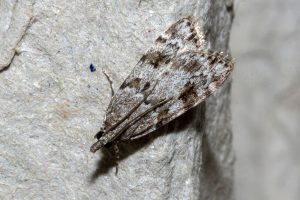
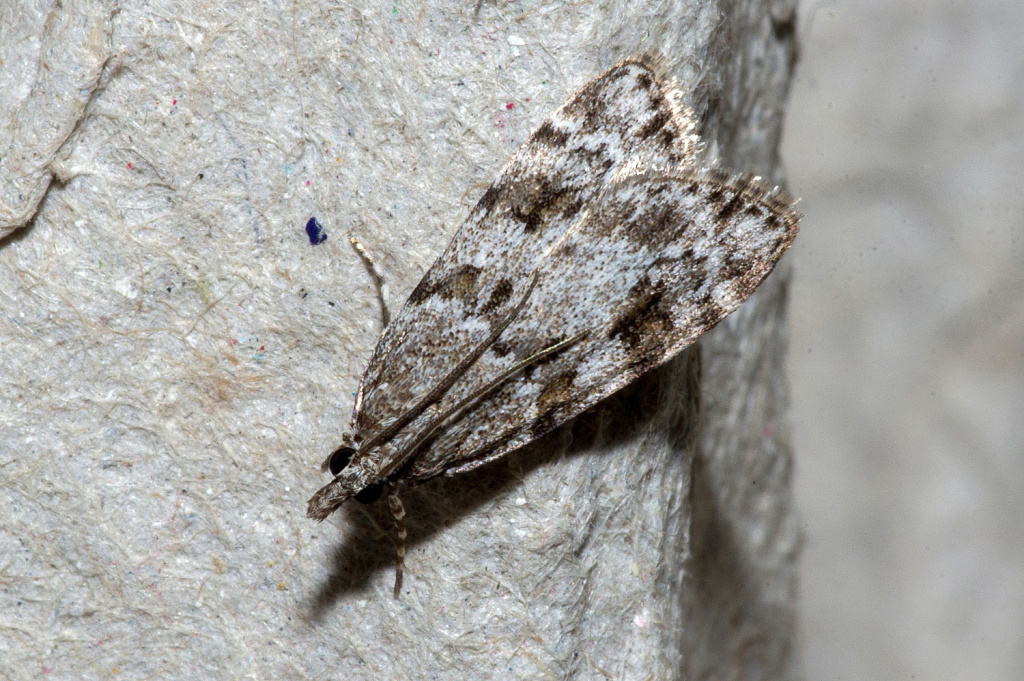
Image Gallery
No gallery images found for this moth.
Temporal Distribution Chart
Adults: (between 1964 - 2020)
Changes in First and Last Recorded Activity Dates Over Time
Distribution Map for Scoparia basistrigalis
↳ from 2026+
↳ 1 from 2020 - 2025
↳ 4 from Before 2020
If the Map Layers function fails, just refresh the page and it should be OK after. Use the +- zoom on the top left, or on a tablet, use two fingers to zoom. Remember, the last layer you ticked is the one which displays the popup information - they sit on top of each other - de-select then re-select, to see the popup values.
Bedrock Geology ** indirectly affects moth distribution by influencing the type of habitat and food plants available in an area. In turn, this may affect the types of moths that can thrive, or where they can most likely be found.
NBN Atlas UK Distribution for – Scoparia basistrigalis
⚠️ Please wait for the map to load fully – do not click the link shown.
Note – the NBN Atlas datasets are listed in the map below and vary in their currency (uptodateness) – however,
the map does give a general indication of the moth's distribution across the UK.
Monthly Records By Year:
Scoparia basistrigalis
( data includes both Larvae and Adult Stages )
Monthly Counts By Year:
Scoparia basistrigalis
( data is based on 'Adult' stage records only )
First/Last Recorded Dates: Scoparia basistrigalis
Adult-only & Anything [Larvae, Pupae, Adult, Mines]
Shading shows moth presence between dates
Click the colour discs below to Select/De-select as Required
Recordings By Year: Scoparia basistrigalis
( All data includes both Larvae and Adult Stages )
Annual Growth Rate (AGR): Scoparia basistrigalis
AGR: 0% | Total % Change: 0%
Hectad (10kmx10km) Coverage: Scoparia basistrigalis
( data includes both Larvae and Adult Stages )
Flight Periods – Indicative –vs– Recorded Data
Scoparia basistrigalis
Scoparia basistrigalis
Flight Period chart – the grey hatched area above, which can cross one or more months, pictorially represents the best guess we have for this moth's flight periods [month/s]. The coloured lines represent the actual months seen in flight, from site observation records received between 2020-2026.
Records Behind the Map and Charts - Scoparia basistrigalis – 5 records available
Listed by Year - descending - scroll across to see all table columns
| Site Name | Tetrad | Date | Count | Stage | Recorder | Source | RecordKey |
|---|---|---|---|---|---|---|---|
| Allestree, Derby | SK33P | 01/07/2020 | 1 | adult | Plant, Stephen | vc57_irecords_extract | iBRC53161664 |
| Backgarden Marehay | SK34Z | 21/07/2012 | 1 | Adult | Thorpe, Steve | vc57_irecords_extract | iBRC33510917 |
| Bamford St,Ripley | SK34Z | 21/07/2012 | 1 | Adult | Thorpe, Steve | vc57_danes_bc_data | LC000334001CP82O |
| Crich Chase, Ambergate (site not precise) | SK35L | 27/06/1996 | 1 | Adult | VC57 Derbyshire Recorder | vc57_danes_bc_data | LC000334001CP19J |
| Sheepbridge Sports Ground, nr Chesterfield | SK37X | 21/06/1964 | 1 | Adult | VC57 Derbyshire Recorder | vc57_danes_bc_data | LC000334001CP0J1 |