
32.002 BF667
– Black-marked Diviner – Semioscopis steinkellneriana – ([Denis & Schiffermüller], 1775)
Adult Micro:
CAT 2
– Can be confused with other species –
Leaf-miner:
CAT A
– Recorded accepted without the leaf or a photo –
Larval Case:
C1
– Distinctive Species –
 – click for General Verification Guidelines |
– click for Specific Verification Guidelines
– click for General Verification Guidelines |
– click for Specific Verification Guidelines
– click for General Verification Guidelines |
– click for Specific Verification Guidelines
 – Uncertain/Unknown – Insufficient Data
 – care required in the identification process, as confusion with similar species is likely – quality photographs required.
Confusion Species: Semioscopis avellanella – (Early Diviner)
ID pointers: The forewing is a light grey to light brown often with a rosy tinge and black flecks. The most motable feature is a dark, downward streak near the middle of the forewing, which distinguishes it from similar Semioscopis avellanella (the streak starts at the wing base).
Distribution:
Uncertain – insufficient data – 1985 – Poker’s Lees, nr. Melbourne 12/4/2004 ; Calke Park 2007; 1 attracted to MV Light 19/3/2026 Belper
General Comment: None
*** Last updated on 29 March 2026 by RP ***
Last Recorded Year: 2026
First Recorded Year: 1997
Last Recorded By – Dave Evans
Last Recorded General Area – Belper
Images of Interest
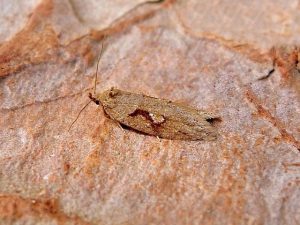
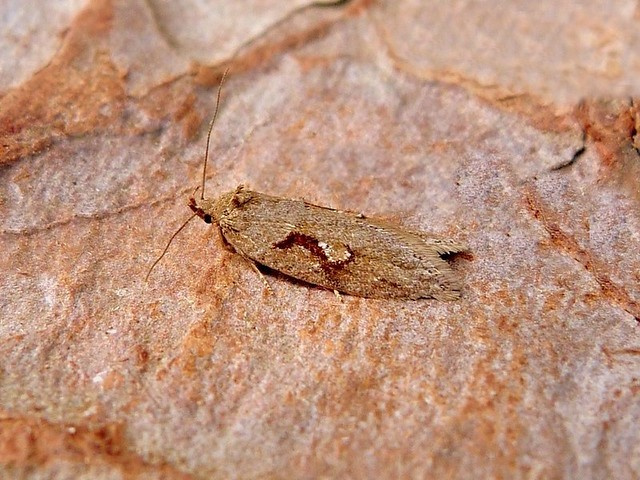
Image Gallery
No gallery images found for this moth.
Temporal Distribution Chart
Adults: (between 1997 - 2026)
(click legend below to show/hide datasets)
This chart summarises all available historical occurrence records collated by ISO week of the year. It reflects recorder effort and sampling distribution as well as true biological activity, and should be interpreted as an indicative pattern of seasonal occurrence rather than a statistically controlled abundance or phenology model.