

62.029 BF 1452
– Oak Knot-horn – Phycita roborella – (Denis & Schiffermüller, 1775)
Adult Micro:
CAT 1
– Distinctive species unlikely to be confused with others –
 – click for General Verification Guidelines |
– click for Specific Verification Guidelines
– click for General Verification Guidelines |
– click for Specific Verification Guidelines
– click for General Verification Guidelines |
– click for Specific Verification Guidelines
 – Uncommon / Scarce
** Identification write up required
**
 – easy to identify, generally distinctive and unlikely to be confused with other species.
Distribution:
Appears to be uncommon and recorded in small numbers each year. 2 records in 2024, 3 in 2023 – Harrison & Sterling recorded 5 accounts between 1917 – 1981
Danes records 11 between 1997 – 2013 and iRecord 15 accounts between 2006 – 2024.
General Comment: None
Danes records 11 between 1997 – 2013 and iRecord 15 accounts between 2006 – 2024.
*** Last updated on 21 July 2026 by TD ***
Last Recorded Year: 2024
First Recorded Year: 1997
Last Recorded By – Emily Milnes
Last Recorded General Area – Sandiacre
Images of Interest
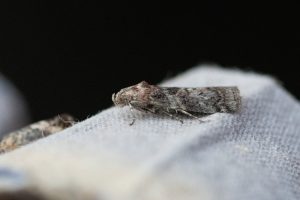

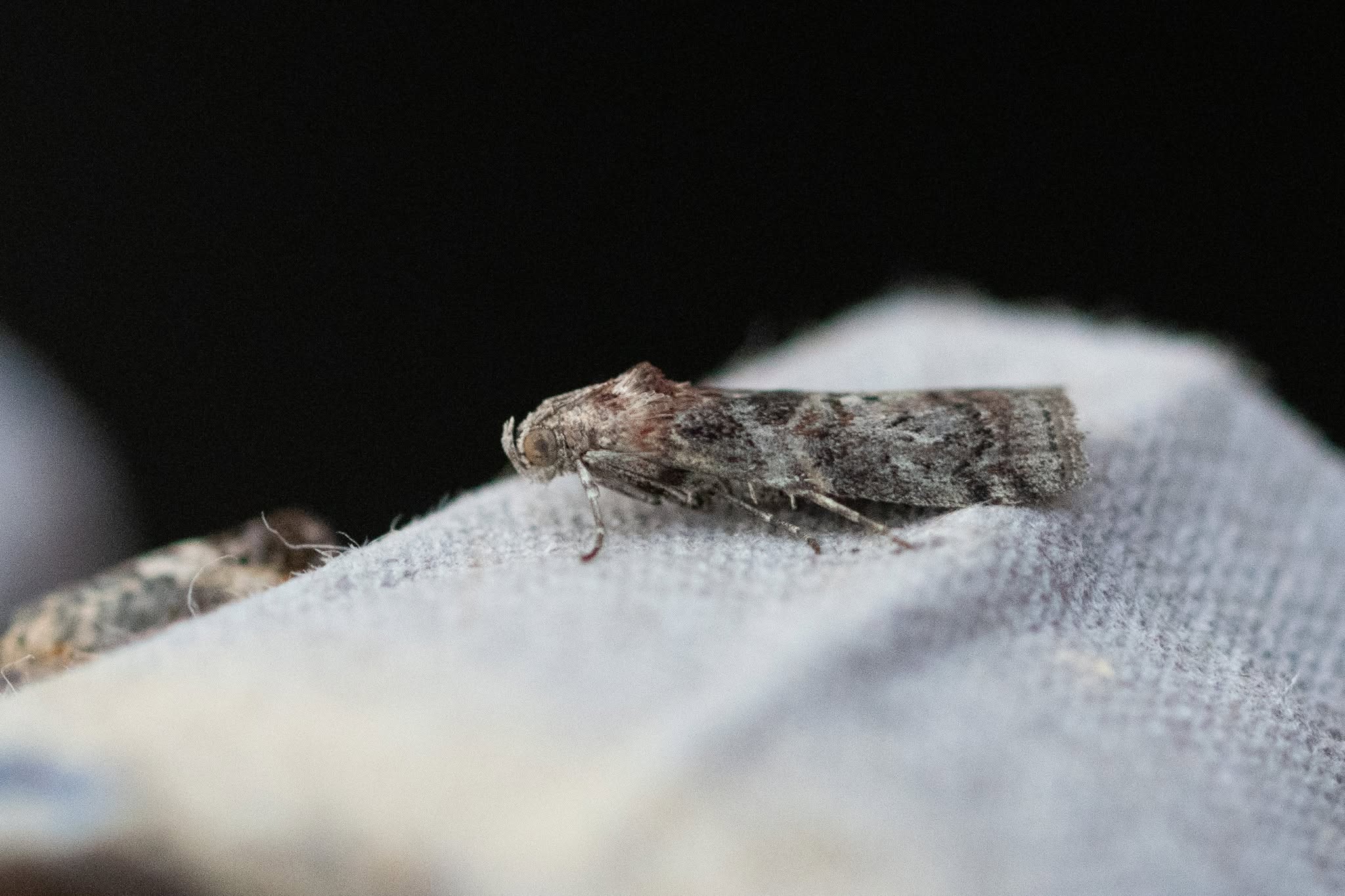

Image Gallery
No gallery images found for this moth.
Temporal Distribution Chart
Adults: (between 1997 - 2026)
(click legend below to show/hide datasets)
This chart summarises all available historical occurrence records collated by ISO week of the year. It reflects recorder effort and sampling distribution as well as true biological activity, and should be interpreted as an indicative pattern of seasonal occurrence rather than a statistically controlled abundance or phenology model.
Changes in First and Last Recorded Activity Dates Over Time
Activity Data Range:
1997 –
2026
Earliest Appearance:
16th June (in 2021)
Latest Appearance:
6th September (in 2026)
This chart presents a time-series summary of recorded observations. It is based on available records at the time of analysis and will evolve as further data are added. The rolling mean provides a smoothed representation of variation in recorded activity over time. Annual record totals are shown for context; years with fewer records may provide a less complete representation of activity than years with higher recording intensity. Interpretation should consider that apparent trends may reflect both biological change and variation in recording effort.