
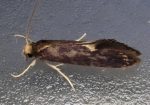
 Larval Case: C1 – Distinctive Species –
  – click for General Verification Guidelines | – click for Specific Verification Guidelines
  – Uncertain/Unknown – Insufficient Data
  – Leaf-miner
  – Day-flying
 – care required in the identification process, as confusion with similar species is likely – quality photographs required.
 Confusion Species: As adult – Monopsis obviella
Mine Period Additional: None.
Mine ID Difficulty:
 – Easy to identify, generally the leaf mine is distinctive and unlikely to be confused with other species.
 Mine Type/s: Blotch
Mine Feeding Method/s: Not Recorded
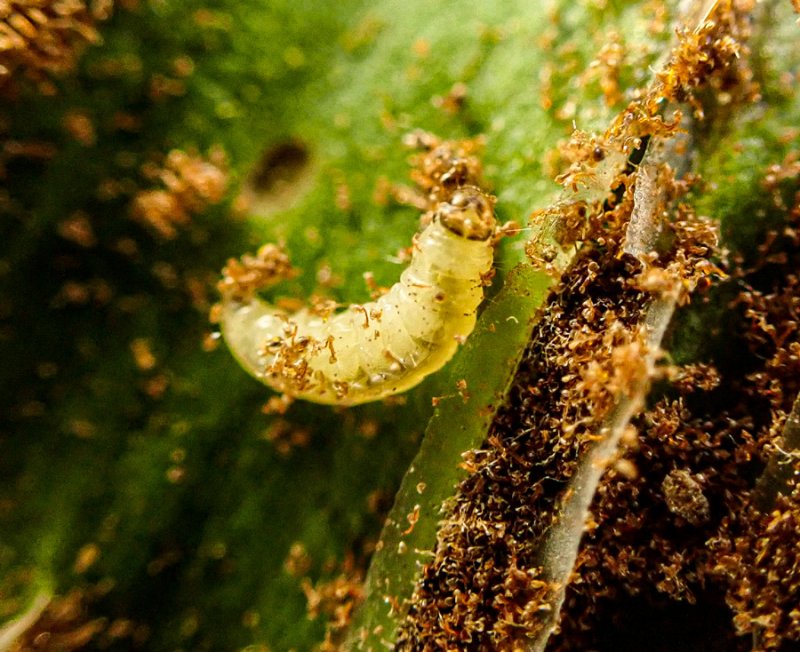
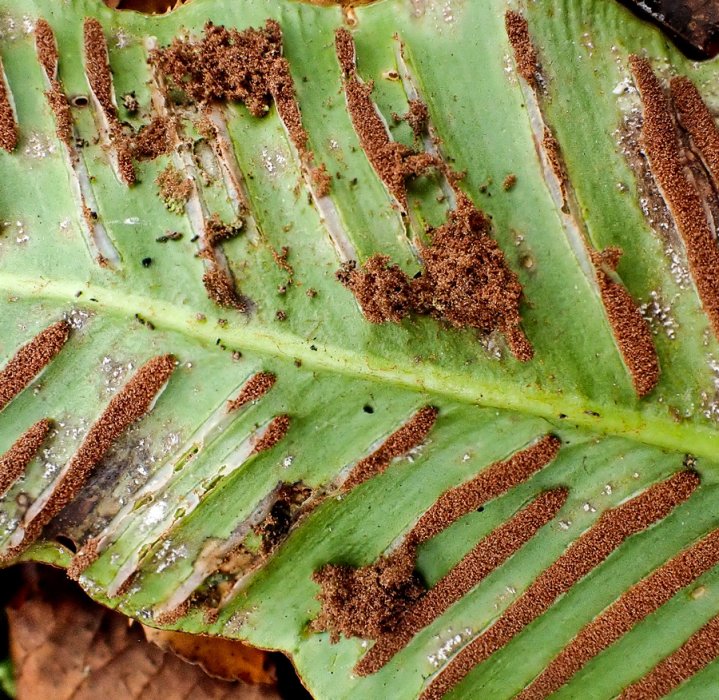
Mine Comment: P. filicivora is easily confused with its close relative, Psychoides verhuella (Hart’s-tongue Moth). The key difference lies in the larva: P. filicivora larvae have a brown head and lack a black anal plate, whereas P. verhuella larvae have a black head. The larva typically hides on the underside of the fern frond. It covers itself in a loose, untidy mass of the fern’s sporangia (spore cases) while feeding. They primarily consume the sporangia and the lower surface of the frond, sometimes creating an irregular blotch mine within the leaf tissue itself.


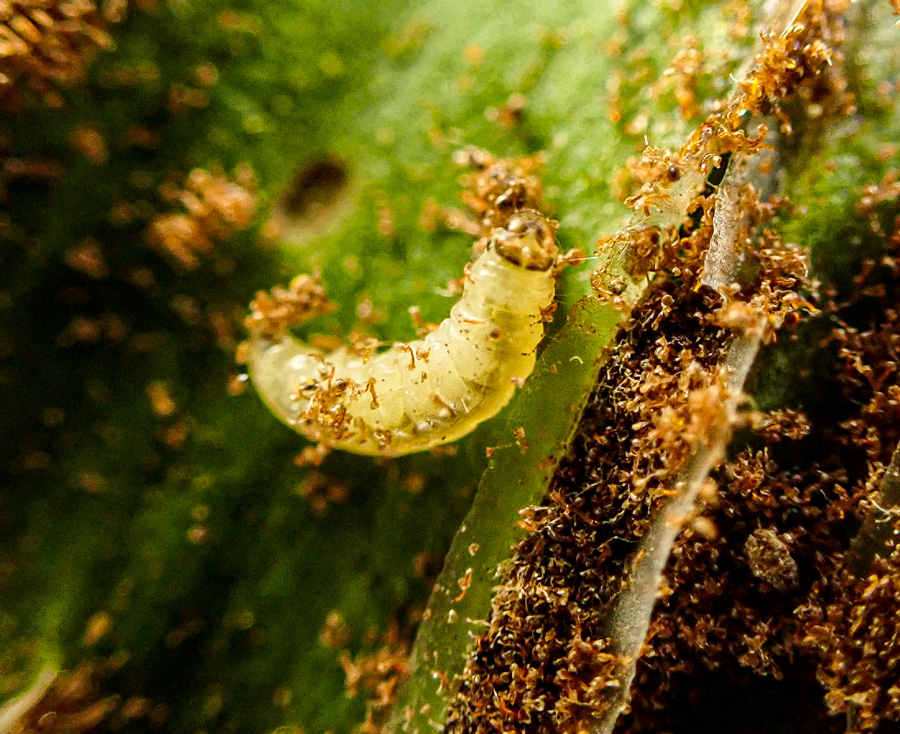

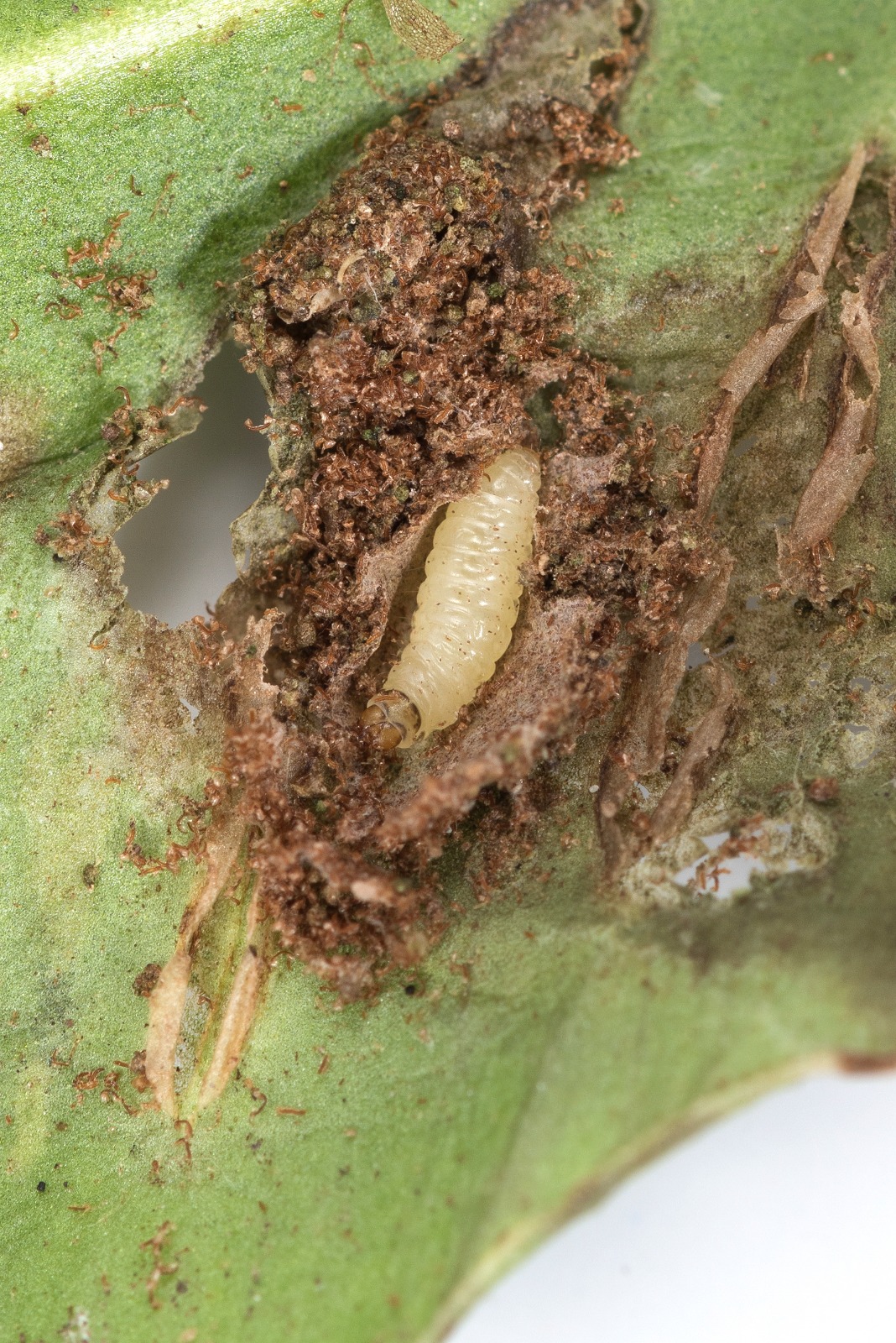
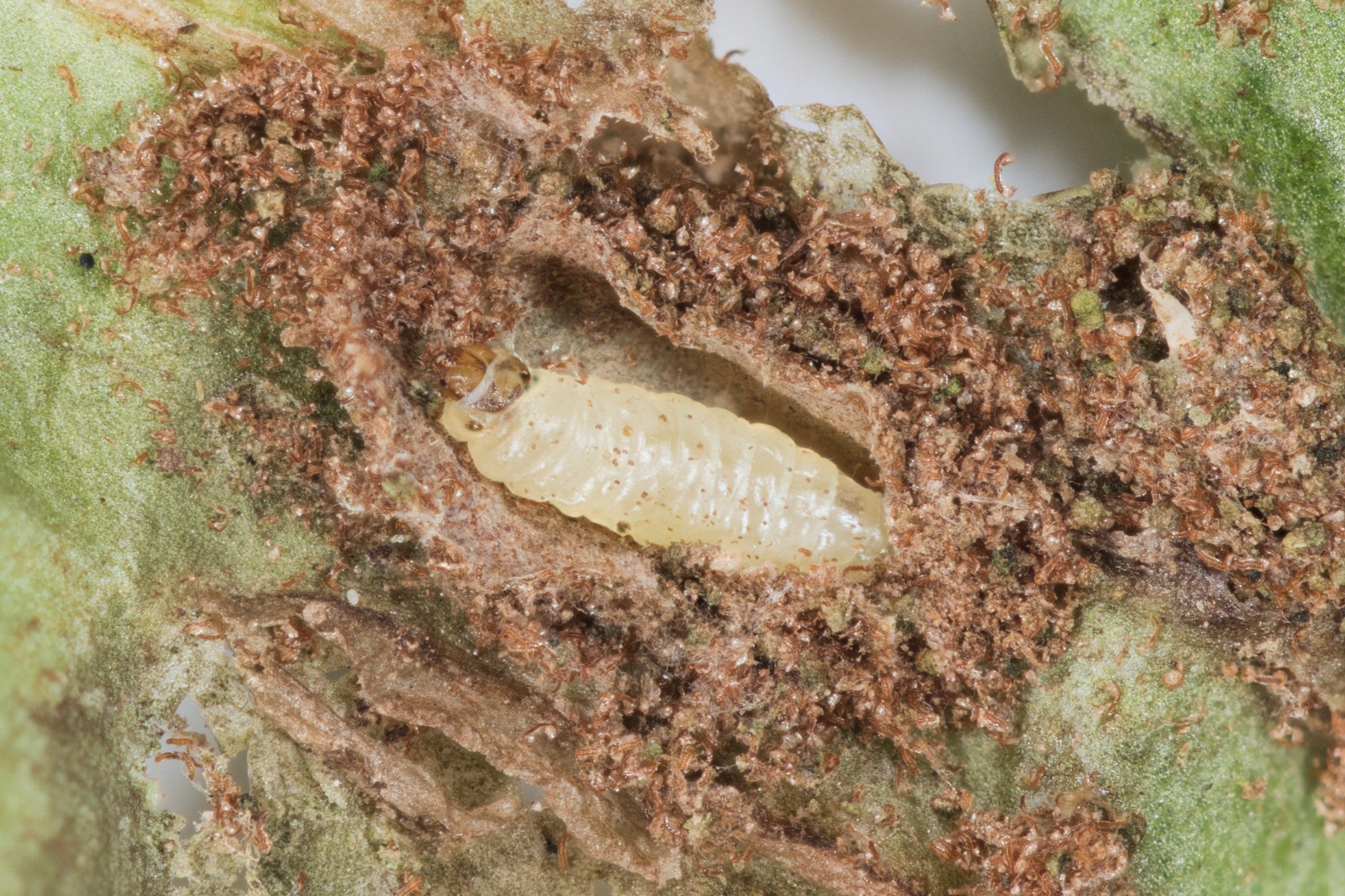

Image Gallery

Temporal Distribution Chart
Adults: (between 2012 - 2025) | Immatures: (between 2010 - 2025)
Distribution Map for Psychoides filicivora
↳ from 2026+
↳ 26 from 2020 - 2025
↳ 4 from Before 2020
If the Map Layers function fails, just refresh the page and it should be OK after. Use the +- zoom on the top left, or on a tablet, use two fingers to zoom. Remember, the last layer you ticked is the one which displays the popup information - they sit on top of each other - de-select then re-select, to see the popup values.
Bedrock Geology ** indirectly affects moth distribution by influencing the type of habitat and food plants available in an area. In turn, this may affect the types of moths that can thrive, or where they can most likely be found.
NBN Atlas UK Distribution for – Psychoides filicivora
⚠️ Please wait for the map to load fully – do not click the link shown.
Note – the NBN Atlas datasets are listed in the map below and vary in their currency (uptodateness) – however,
the map does give a general indication of the moth's distribution across the UK.
Monthly Records By Year:
Psychoides filicivora
( data includes both Larvae and Adult Stages )
Monthly Counts By Year:
Psychoides filicivora
( data is based on 'Adult' stage records only )
First/Last Recorded Dates: Psychoides filicivora
Adult-only & Anything [Larvae, Pupae, Adult, Mines]
Shading shows moth presence between dates
Click the colour discs below to Select/De-select as Required
Recordings By Year: Psychoides filicivora
( All data includes both Larvae and Adult Stages )
Annual Growth Rate (AGR): Psychoides filicivora
AGR: 2.48% | Total % Change: 37.5%
Hectad (10kmx10km) Coverage: Psychoides filicivora
( data includes both Larvae and Adult Stages )
Flight Periods – Indicative –vs– Recorded Data
Psychoides filicivora
Psychoides filicivora
Flight Period chart – the grey hatched area above, which can cross one or more months, pictorially represents the best guess we have for this moth's flight periods [month/s]. The coloured lines represent the actual months seen in flight, from site observation records received between 2020-2026.
Mine Periods – Indicative –vs– Recorded Data
Psychoides filicivora
Psychoides filicivora
( data includes both Larvae and Adult Stages )
Mine Period chart – the grey hatched area above, which can cross one or more months, pictorially represents the best guess we have for this moth's mine periods [month/s]. The coloured lines represent the actual months seen mining, from site observation records received between 2020-2026.
Records Behind the Map and Charts - Psychoides filicivora – 30 records available
Listed by Year - descending - scroll across to see all table columns
| Site Name | Tetrad | Date | Count | Stage | Recorder | Source | RecordKey |
|---|---|---|---|---|---|---|---|
| Glossop, Little Hayfield | SK08J | 21/10/2025 | 2 | Leaf-mine | Heintzen, Christian | vc57_irecords_extract | iBRC47521368 |
| sheffield | SK38M | 05/06/2025 | 1 | adult | Turner, Jan | vc57_irecords_extract | iBRC42175491 |
| Belper | SK34U | 30/05/2025 | 1 | adult | Evans, Dave | vc57_irecords_extract | iBRC41953116 |
| upper cromford garden | SK25Y | 22/05/2025 | 3 | adult | Ashton, Clive | vc57_irecords_extract | iBRC41753294 |
| upper cromford garden | SK25Y | 21/05/2025 | 1 | adult | Ashton, Clive | vc57_irecords_extract | iBRC41733054 |
| Sheffield | SK38M | 20/05/2025 | 1 | adult | Turner, Jan | vc57_irecords_extract | iBRC41825735 |
| Sheffield | SK38M | 17/05/2025 | 1 | adult | Turner, Jan | vc57_irecords_extract | iBRC41724597 |
| Florence road, Sheffield | SK38L | 02/05/2025 | 1 | adult | Jim Horsfall | vc57_irecords_extract | iBRC48411055 |
| Mbridge at Markham Vale North Tip | SK47L | 02/03/2025 | 3 | larva | Radford, Mark | vc57_irecords_extract | iBRC40325789 |
| Glossop, Gnat Hole | SK09G | 31/12/2024 | 1 | Larva | Heintzen, Christian | vc57_irecords_extract | iBRC40053325 |
| Pottery Wood | SK32G | 05/11/2024 | 1 | larva | Finch, Graham Leonard | vc57_irecords_extract | iBRC41038954 |
| upper cromford garden | SK25Y | 03/09/2024 | 1 | adult | Ashton, Clive | vc57_irecords_extract | iBRC38312470 |
| Hathersage | SK28F | 12/08/2024 | 1 | adult | Kydd, Alan | vc57_irecords_extract | iBRC39925724 |
| Sandiacre | SK43S | 11/08/2024 | 1 | adult | paul buxton | vc57_irecords_extract | iBRC37850694 |
| Glossop, Hague Street, Hay meadow | SK09G | 06/06/2024 | 1 | adult | Heintzen, Christian | vc57_irecords_extract | iBRC36773519 |
| upper cromford garden | SK25Y | 31/05/2024 | 1 | adult | Ashton, Clive | vc57_irecords_extract | iBRC36207091 |
| upper cromford garden | SK25Y | 02/05/2024 | 1 | adult | Ashton, Clive | vc57_irecords_extract | iBRC35722034 |
| Bentinck Drive Clowne Derbyshire | SK57C | 23/04/2024 | 1 | adult | Darby, April | vc57_irecords_extract | iBRC35562891 |
| Cromford Church, outer wall | SK25Y | 28/12/2023 | 1 | mine (tenant | Penson, Melanie | vc57_irecords_extract | iBRC34440569 |
| Castleton, Hope Valley S, UK | SK18L | 15/04/2022 | 1 | Adult | Rowan McCulloch | vc57_irecords_extract | iBRC24913458 |
| Buxton SK, UK | SK07S | 12/10/2021 | 1 | Adult | Orridge, Steve | vc57_irecords_extract | iBRC22986247 |
| Buxton SK, UK | SK07L | 08/06/2021 | 1 | Adult | Orridge, Steve | vc57_irecords_extract | iBRC38872167 |
| Ladycroft Ave, Buxton | SK07S | 07/06/2021 | 1 | adult | Orridge, Steve | vc57_irecords_extract | iBRC35092561 |
| Woodland Ave | SK43R | 21/11/2020 | 1 | adult | Thorpe, Steve | vc57_irecords_extract | iBRC33502422 |
| Not given | SK38M | 27/08/2020 | 1 | Adult | Turner, Jan | vc57_irecords_extract | iBRC17804185 |
| Norton Lees | SK38L | 18/05/2020 | 1 | adult | Mella, Pete | vc57_irecords_extract | iBRC50549142 |
| Shirland-Hallfieldgate Lane | SK35Z | 04/09/2015 | 1 | Adult | Mahadevan, Nikki | vc57_irecords_extract | iBRC35070585 |
| George St,Belper | SK34N | 14/09/2012 | 1 | Adult | K.R. Huston | vc57_danes_bc_data | LC000334001COYIY |
| Ticknall Limeyards,Ticknall | SK32R | 22/03/2010 | 2 | Larvae | VC57 Derbyshire Recorder | vc57_danes_bc_data | LC000334001CP56P |
| nr Lower Cliffe Farm, Strines Station, New Mills | SJ98T | 15/03/2010 | 1 | Larvae | S.H. Hind | vc57_danes_bc_data | LC000334001COX0Q |